

About
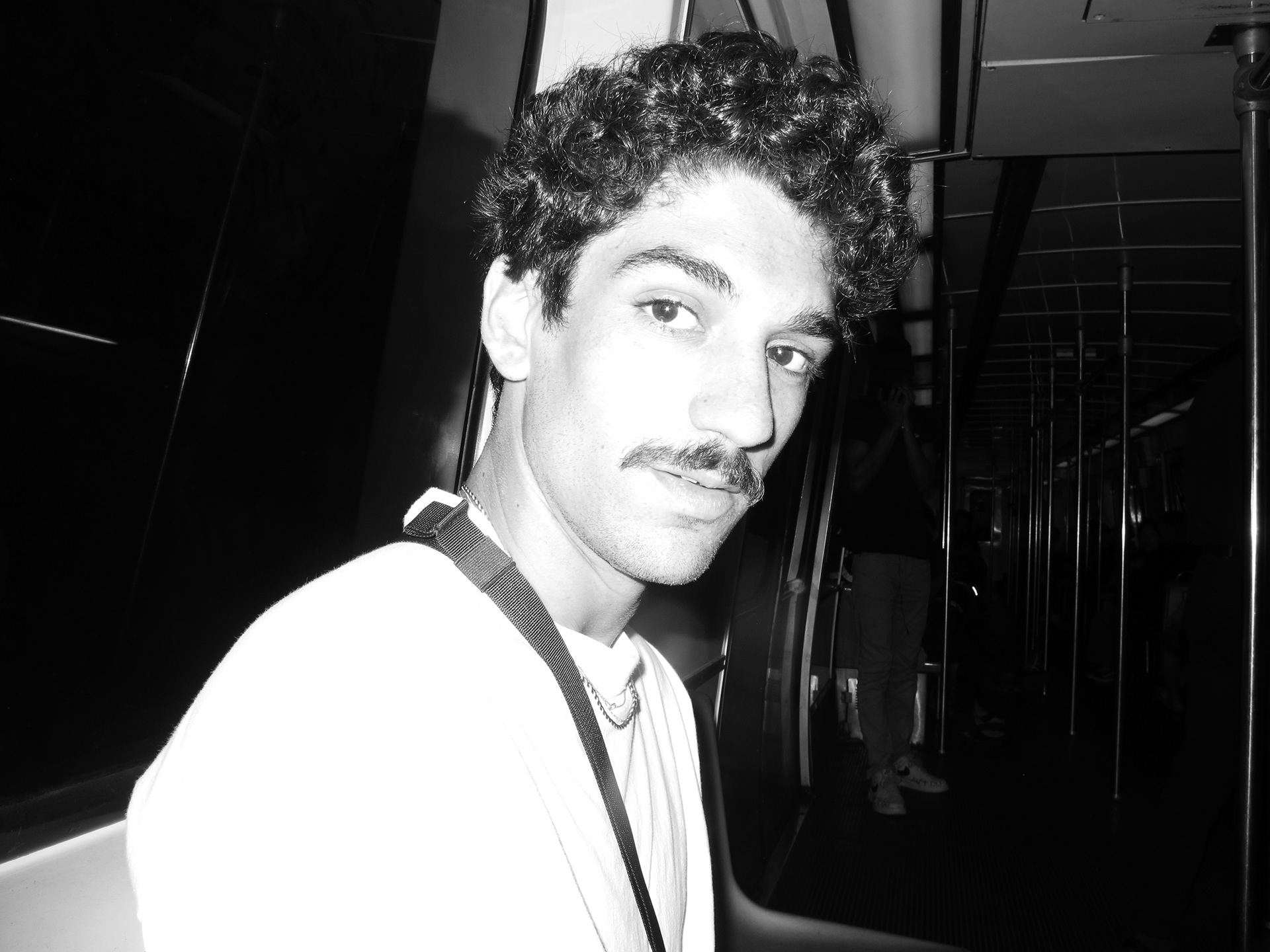
Guilherme Simas
Born 2000, Rio de Janeiro, Brazil
Based in Barcelona
Based in Barcelona
Guilherme Simas is a designer and artist graduated in Product Design from PUC Rio, with a Master’s degree in Beyond Product at Elisava (2025). His practice moves between art, design, and research, combining technical skills such as 3D modeling, rendering, and product detailing with experimental processes.
His early works emerged from stencil painting, using found objects as unconventional canvases. He collected discarded materials — pieces of wood, metal panels, fragments of furniture — drawn by their textures and histories. Each surface carried traces of previous lives, which he transformed through layered images and gestures. The act of collecting soon became as important as the image itself, turning the city into both source and studio.
His practice unfolds through walking, archiving, and writing as ways to observe and inhabit the constant transformation of everyday spaces. He approaches the city as a living archive — a place where traces, discarded objects, and subtle gestures reveal the fragile relationship between humans and their surroundings. Through these encounters, he builds visual and textual narratives that blur the boundaries between documentation and fiction.
His project Impermanent Spaces / Situated Places, developed during his Master’s program at Elisava, established walking as both an artistic and research practice. It became a way to listen, record, and recompose the material and emotional layers of the city. The resulting work combined photography, experimental writing, and found objects into an ongoing archive of impermanence.
Alongside his artistic practice, he has professional experience in furniture and product design, having worked with Lattoog Studio and Gisela Simas Design on the creative and technical development of furniture pieces, as well as exhibition design for art and design fairs.
Across his practice, he remains interested in how gestures of collecting, arranging, and writing can translate the minor landscapes that persist, disappear, and quietly reappear into spaces of reflection and care.